Postwar Canada and the Modernist Turn
After the Second World War, Canadian cities embraced modern architecture as an expression of administrative efficiency, technical competence and economic maturity. Government buildings, campuses, cultural institutions and corporate headquarters adopted streamlined forms and new structural systems.
The language varied from region to region, but common themes included rational planning, curtain walls, concrete experimentation and an emphasis on infrastructure as a visible sign of national progress. Architecture was expected to be useful, contemporary and publicly legible.
Modernism in Canada was often less utopian than in manifestos and more managerial in tone: an architecture of competent growth, institutions and systems.
Toronto as a Modernist Laboratory
Toronto became one of the country's most important modernist settings through commercial expansion, university building programs and major corporate commissions. Mies van der Rohe's Toronto-Dominion Centre, Viljo Revell's City Hall and later civic complexes gave the city an unusually concentrated modern architectural vocabulary.
This context matters for the CN Tower because the tower did not rise in a stylistic vacuum. It entered a city already accustomed to architectural statements that linked technical sophistication with metropolitan ambition.
- Corporate modernism concentrated in the financial core
- Civic modernism reshaped public identity through City Hall and plazas
- Infrastructure modernism linked transportation and communications to architectural image
Concrete, Systems and National Scale
Canadian modernism often embraced concrete not just as a cheap structural material but as a medium suited to climate, monumentality and infrastructural seriousness. Universities, arts centers and transport facilities used exposed or carefully finished concrete to project permanence.
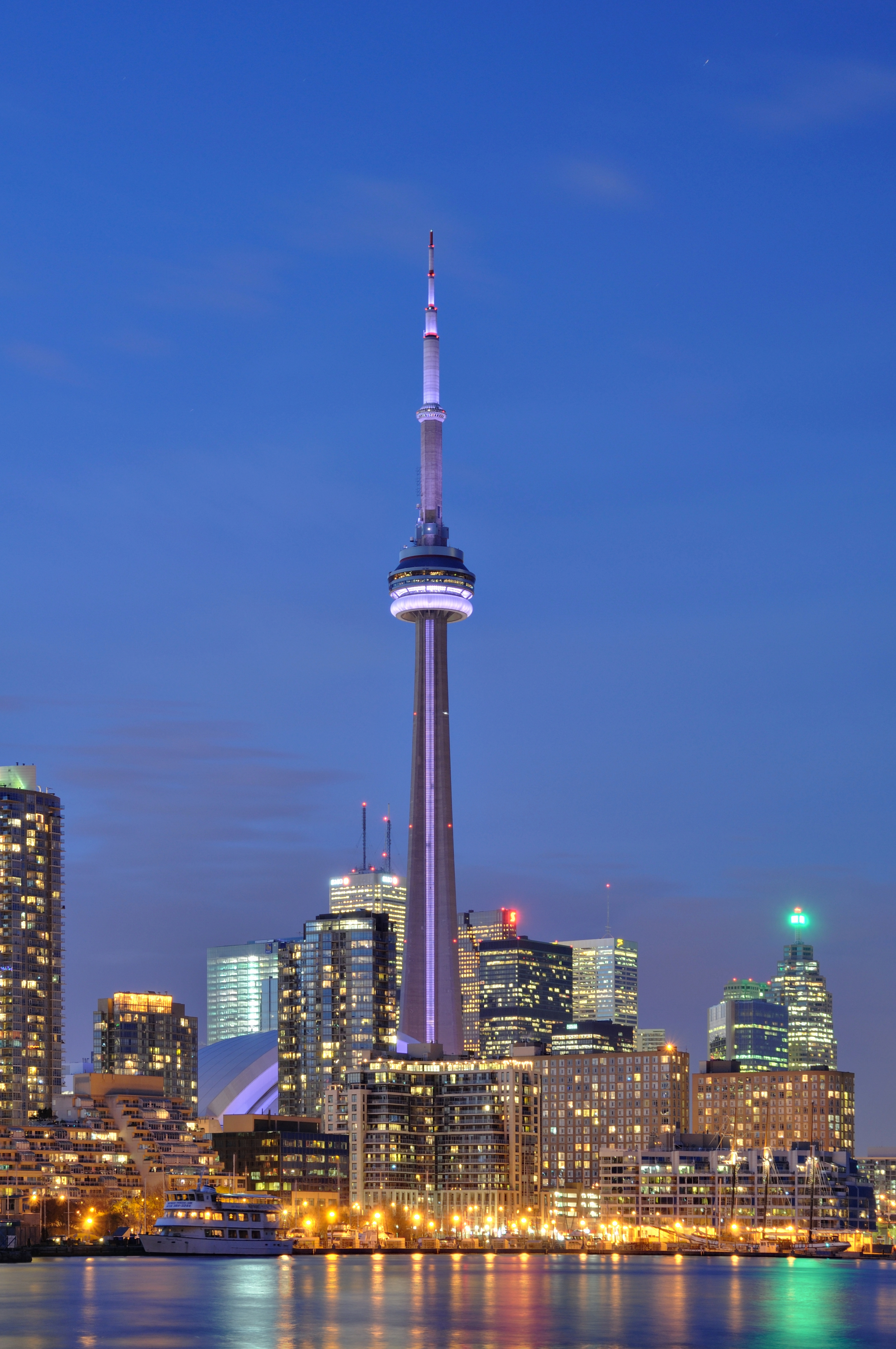
The CN Tower extends that material confidence to an extreme scale. Its concrete shaft is not merely structural necessity; it also belongs to a national design culture comfortable with engineering-led expression and large territorial systems.
In the CN Tower, concrete reads as both technical solution and cultural statement: sober, massive and unapologetically infrastructural.
Modernism, Public Access and Civic Symbolism
Many modernist projects were criticized for abstraction or detachment, yet their most successful examples created strong public images and memorable civic spaces. Observation decks, plazas, squares and dramatic circulation routes helped translate technical forms into popular experience.
The CN Tower followed that pattern by pairing a hard engineering rationale with broad public access. Its success suggests that modern architecture gains durability when people can occupy it, narrate it and attach rituals to it.
- Public accessibility turns abstract form into lived civic memory
- Landmark visibility helps buildings exceed specialist architectural audiences
- Tourism can preserve modern structures by keeping them culturally current
The CN Tower Within the Canadian Canon
The tower is an unusual member of the Canadian modernist canon because it is neither a conventional building nor an easily classifiable piece of urban design. Yet it expresses core modernist themes: faith in engineering, clarity of purpose, and the belief that technological form can stand for collective progress.
Placed beside Toronto's corporate towers and civic landmarks, the CN Tower reads as the vertical culmination of a broader postwar imagination. It remains one of the clearest Canadian examples of infrastructure elevated into architecture without losing its underlying seriousness.